Overbites, underbites and crossbites affect how your teeth fit together, how you chew and even how you feel about your smile. If you’ve noticed your upper and lower teeth don’t line up quite right, you’re not alone. Braces By Dr. Ruth helps smiles for all ages correct bite issues with modern, personalized care right here in Nashville.
This guide breaks down the most common bite issues, how they’re diagnosed and what treatment looks like from start to finish.
What Are Overbites, Underbites and Crossbites?
Overbites, underbites and crossbites are types of malocclusion, a clinical term that simply means your teeth don’t meet properly when your jaws close. According to the American Association of Orthodontists (AAO), most people have some degree of malocclusion, but moderate to severe cases benefit from orthodontic care.
Here’s a quick breakdown of each type:
- Overbite: Your upper front teeth overlap the lower front teeth too much. A slight overlap is normal, but excessive coverage can cause wear and jaw strain.
- Underbite: Your lower front teeth extend past the upper front teeth when you bite down. This often points to a skeletal jaw difference.
- Crossbite: Some of your upper teeth sit inside the lower teeth instead of outside. This can happen in the front (anterior crossbite) or the back (posterior crossbite).
- Open bite: Your front or back teeth don’t touch at all when your mouth is closed. Thumb-sucking and tongue habits often play a role.
Dr. Ruth sees every type of bite issue every week, and often a mix of them in the same smile. The good news? All are treatable, and the right plan can make a big difference at any age.
How Orthodontists Diagnose and Correct Bite Problems
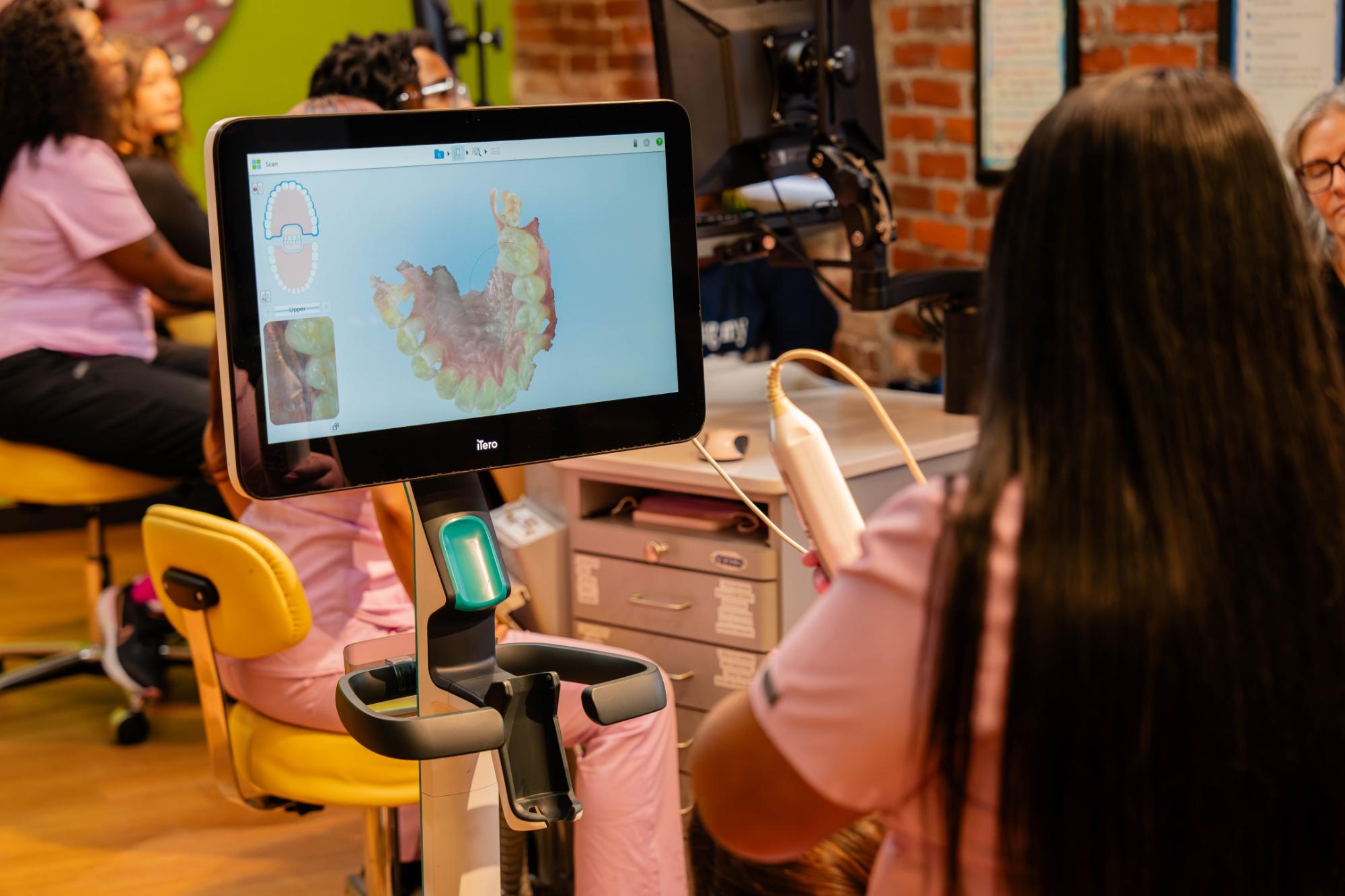
Diagnosing a bite issue starts with a thorough exam. Your first visit at our Nashville practice includes X-rays, pictures and digital scans so Dr. Ruth can see exactly how your teeth and jaws are working together. Modern digital tools give us a full picture without the mess of old-school molds, and the whole process is quick and comfortable.
One of the most important early steps is figuring out whether your bite issue is dental or skeletal. A dental malocclusion means the teeth are out of alignment, but the jaws are in the right place. A skeletal malocclusion involves the jawbones themselves. This distinction shapes the treatment plan and helps Dr. Ruth choose the best appliance combination for your smile.
Here’s how bite correction typically works:
- Braces or Invisalign apply gentle, controlled forces to gradually move teeth into proper alignment.
- Palatal expanders widen the upper arch, which is especially effective for correcting crossbites in growing children.
- Elastics and auxiliary appliances help shift the jaw relationship for overbites and underbites, guiding the bite into a better position over time.
- Orthognathic surgery combined with orthodontics may be recommended for severe skeletal cases in adults where jaw growth is complete.
With over 25 years of dental experience, Dr. Ruth Edmonds tailors every plan to the individual. No two bites are exactly alike, and your treatment shouldn’t be either.
Benefits of Correcting Bite Problems
Fixing a bite issue does more than straighten your smile. Correcting alignment changes how you eat, speak, sleep and feel about your grin, and patients often notice the difference in weeks, not months.
Here’s what proper bite correction can do for you:
- Better chewing. When your teeth meet correctly, eating becomes easier and more efficient. No more favoring one side of your mouth.
- Less jaw tension. Misaligned bites put stress on the temporomandibular joint (TMJ), which can lead to soreness, clicking and frequent headaches. Correcting the bite eases that pressure.
- Reduced tooth wear. Teeth that hit unevenly wear down faster, chip more easily and lose enamel over time. Alignment protects your teeth for the long haul.
- Easier brushing and flossing. Straight, well-aligned teeth are much simpler to clean. That means a lower risk of cavities and gum disease.
- Clearer speech. Certain bite issues, especially open bites and underbites, can affect how you pronounce specific sounds. Correction often improves speech clarity naturally.
- A more confident smile. When your bite works well and your teeth look great, you smile more. It’s that simple.
- Improved facial balance. Severe bite issues can affect facial symmetry. Treatment can subtly enhance your profile as your jaw and teeth align.
The health benefits are just as important as the cosmetic ones. Many patients tell us they wish they’d started sooner.
Treatment Options Compared: Braces, Invisalign and Expanders
Choosing the right treatment depends on your age, the type of bite issue and your lifestyle. Our Nashville practice offers several proven options so you can find the right fit for your smile and your schedule.
- Metal braces are the most versatile choice and handle even the most complex bite corrections beautifully. They’re durable, effective and often the fastest route for major changes.
- LightForce clear braces use custom 3D-printed brackets designed for your teeth specifically. They’re discreet, precise and often more comfortable than traditional ceramic options.
- Invisalign uses a series of removable, nearly invisible aligners. It works best for mild-to-moderate bite issues and is popular with teens and adults who want a low-profile option.
- Palatal expanders are ideal for children with crossbites or narrow upper arches. Used at the right age, they can prevent more involved treatment later.
- Same-day starts let you begin your smile transformation the same day as your free consult, so you don’t have to wait to see progress.
Quick Comparison
| Treatment | Visibility | Comfort | Best For | Typical Length |
|---|---|---|---|---|
| Metal Braces | Visible | Good | Complex bites, all ages | 12 to 24 months |
| LightForce Clear Braces | Discreet | Very Good | Moderate-to-complex cases | 12 to 20 months |
| Invisalign | Nearly Invisible | Excellent | Mild-to-moderate bites | 12 to 18 months |
| Palatal Expanders | Hidden (upper) | Good | Kids with crossbites | 6 to 12 months |
Dr. Ruth will guide you to the option that fits your bite, your budget and your life. We believe in a smile for every budget and flexible financing to make it happen.
Cost Factors for Bite Correction Treatment
The cost of bite correction depends on several factors, but most treatment plans fall within a predictable range. Metal braces typically run $3,500 to $6,000 for kids, with adult cases running a little higher, while Invisalign often ranges from $4,000 to $7,500. Palatal expanders and other appliances may add to the total.
Here’s what influences what you’ll pay:
- Severity of the malocclusion. More complex cases require longer treatment and sometimes additional appliances.
- Treatment type. Metal braces, LightForce clear braces and Invisalign each have different price points.
- Treatment length. Most plans run 12 to 36 months. Longer treatment means more visits and materials.
- Extra appliances. Expanders, elastics or retainers can affect the total.
- Insurance and financing. Many plans include orthodontic benefits, and Braces By Dr. Ruth offers flexible financing options and online payment to keep things manageable.
We believe cost shouldn’t stand between you and a healthy smile. That’s why we walk you through every number during your free consult, with no surprises and no pressure.
Who Is a Candidate for Bite Correction?
Almost everyone qualifies for bite correction. Whether you’re 7 or 70, better alignment is possible with the right approach and the right team.
Here’s how candidacy typically breaks down by age:
- Children (ages 7+): The AAO recommends every child have their first orthodontic evaluation by age 7. Phase 1 treatment works especially well for crossbites and narrow arches when the jaw is still growing, and our lucky 7 kids club makes that first visit fun and easy.
- Teens: As permanent teeth erupt and jaw growth continues, teens are prime candidates for full braces or Invisalign. This is often the easiest window for correction.
- Adults: Modern options like Invisalign and LightForce clear braces have made adult orthodontics more popular than ever. It’s never too late to fix a bite that’s bothered you for years.
- Combined bite issues: Many patients have more than one issue, like an overbite paired with a crossbite. These combinations are common and fully treatable.
Caring for smiles of all sizes is what Dr. Ruth does best. Every free consult includes a personalized plan based on your bite, your goals and your timeline.
Frequently Asked Questions About Bite Problems
Can you have an overbite and a crossbite at the same time?
Yes, combined malocclusions are very common. Many patients have an overbite along with a crossbite or crowding. A thorough exam with digital scans can identify every issue so your treatment plan addresses them all together, often within the same treatment window.
At what age should a crossbite be corrected?
Ideally between ages 7 and 10, while the upper jaw is still developing. Phase 1 treatment with a palatal expander can widen the arch and correct a crossbite before it causes uneven wear or jaw asymmetry. Older kids and adults can still be treated, though the approach may involve additional steps.
Can you have an underbite and crossbite together?
Yes, and they’re often treated at the same time. An underbite frequently comes with a crossbite because both involve how the upper and lower jaws relate to each other. Braces, expanders or a combination approach can correct both, and severe skeletal cases may include surgery in adulthood.
What does a 100% overbite look like?
A 100% overbite, also called a “deep bite,” means the upper front teeth completely cover the lower front teeth when you close your mouth. In severe cases, the lower teeth may bite into the roof of the mouth. This type of overbite needs orthodontic care to prevent long-term wear and jaw issues.
How long does bite correction take?
Most bite correction plans take between 12 and 36 months, depending on the severity and treatment type. Mild cases with Invisalign can wrap up in about a year, while complex skeletal cases may take longer. Dr. Ruth will give you a clear timeline at your free consult.
Will bite problems get worse if left untreated?
Yes, most bite issues progress over time. Untreated malocclusions can lead to accelerated tooth wear, TMJ symptoms, gum recession and increased risk of chips and fractures. Getting an evaluation early, even if you’re not sure treatment is needed, is the safest move for your long-term smile health.
Ready to find out what’s possible for your smile? Braces By Dr. Ruth offers free consults in Nashville, complete with digital scans and a personalized plan from Dr. Ruth herself. We can’t wait to see you smile.